When it's that cold there's not much to do and has an effect of everyone.
Here is a picture of a cold, lonely cardinal trying to keep warm in the sunlight and waiting for a turn at the bird feeders.

Come on Spring time...
Come on Spring time...


Count them 1, 2, 3...

I know they're out there a lot more then we see them, even in the summer. It doesn't take a Davy Crockett to see the signs; droppings, hoof prints, chewed plants etc. However, with the leaves off the trees and food scarce they tend to venture closer to houses with the cold weather.
We should discourage them from visiting and run them off when we see them just so they don't do damage to our shrubs, trees and plants but we do enjoy watching them when they come out.

The Vasilopita is a Greek New Year's Bread. It is made in honor of a beautiful act of charity by St. Basil to the poor and needy of his flock. In order to insure that the needy would have money for life's necessities, and knowing that the needy were also proud people, St. Basil had the ladies of his church bake sweet bread with coins baked into them. In this way he could give them money without demeaning them at all. It is therefore traditional to bake a coin into the Vasilopita (St. Basil's Bread). The one who receives the coin is considered to be especially blessed for the year.
Our family tradition is to gather on New Years Day, relax with family and have a nice dinner. After dinner the coffee is put on and the cutting of the Dime Cake begins. My mother always made the cake but with her passing JoAnne now makes it. My Uncle has been cutting the cake for as long as I can remember - since I was a little tyke, and still does it today. The first piece is cut for God, the second for the House and then from oldest to youngest. Although only one dime is baked in the cake my uncle keeps a pocket full of dimes handy and inserts them into the pieces of cake for the kids that are present. It is quite a site to see the kids face light up when they see they're piece has the dime! This is one family tradition that I hope to continue.
Click here for one iteration of the Vasilopita recipe
My oldest daughter Stephanie's U14 ice hockey team won the 2006 Bill Chase Girls Holiday Tournament this past weekend.
They went 3-0-1 in the four games they played and took the championship with a commanding 4 - 0 trouncing of their opponent who they tied earlier in the tournament.
Stephanie's line scored all 4 goals, with Stephanie assisting of the first 2 in the championship game.




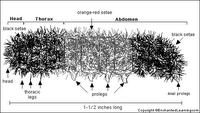
Have a gander at what my dad came across just the other day! Keep in mind that it's December here in New England, so a find like this now is extremely unusual but let me clarify...
It's not that this little guy was on a walk-about. My dad was actually de-installing his sub pump from just outside the basement so it wouldn't freeze. The pump sits in a deep hole that was dug just underneath a grate and crushed stones. Well, this guy had chosen this same place to hibernate for the long, cold winter. Perhaps he was drawn to the cold, dark and damp hole. I didn't want to handle him, so I didn't measure him but I would guess he was close to 7" long.
My dad kept him outside in a bucket, so not to wake him from his winter nap, until we were able to visit. Emilie was excited and refers to him as a lizard. We took a number of pictures before releasing. I placed him near the edge of the wood, under several planks of wood and covered him with some additional cold mulch. Hopefully this will suit him well and keep him safe until March when he'll awaken and make his way to the vernal pool next door for some nookie!!
My dad finding this guy is reassuring to know that they're still out there and doing fine. It also brings back some good memories of when I was young. Come the first full moon in March, ideally on a raining night, we'd put on our rubber boots, grab a flash light and head to the swap in the hopes of finding and seeing these guys on their migration.
I think I will introduce Emilie to this come March 2007.


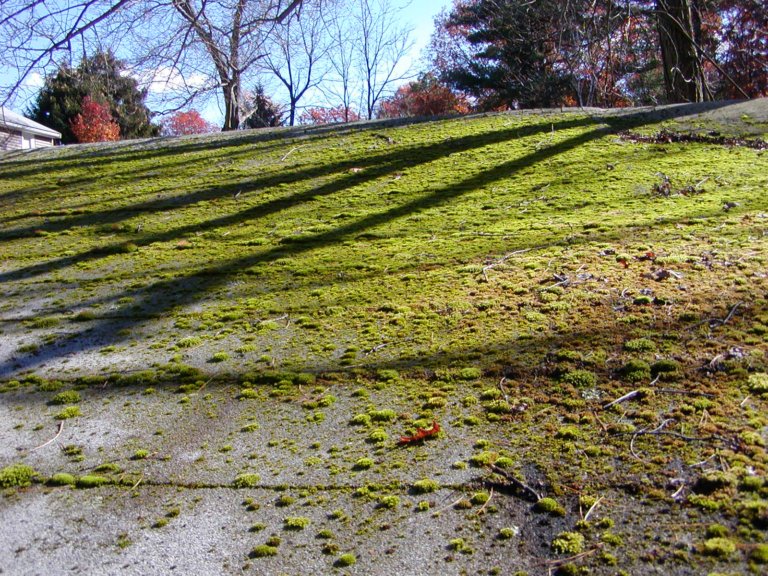
Here are a couple interesting pictures of moss growing on a shed roof...

I was at my dad's house the past Saturday to get his yard cleaned up and put to bed for the winter. The grass needed one last cutting but before that could happen the leaves needed to be picked up, the flower pots needed to be emptied and put away, frost killed annuals needed to be pulled and the gutters needed to be cleaned on both the house and the shed.
I used my 38" lawn sweeper to pick up as many leaves as possible. Although this is a valuable tool, it fills up too quickly with leaves and it did just that time and time again. I must have emptied that over 30 times! Once I had the majority of the leaves up it was then time to use the mower and bag the remaining ones. Once again, the leaves filled the mower bag too quickly and needed to be emptied over and over and over. Anyway, I am happy to say that the majority of the leaves, at that time anyway, were picked up and the grass cut nice and low.
I then moved to cleaning the gutters. I use a hand-held Craftsman leaf blower for this task - it works GREAT! The house gutters were not too bad at all - there are no large trees close to the house so their leaves have little effect. However, the shed roof is a different story, as it sits beneath several tall maples. Needless to say it doesn't take too long for the gutters to fill and become clogged.
Well, as I climbed the ladder to get on the roof I was amazed to see the back of the roof, which is not visible from the house and day to day activity, was covered with moss! It looked like the roof was covered with a nice green carpet. This is NOT a good thing to have happening, not at all. The moss retains moisture, which does damage to the shingles, as well as the added weight. We need to understand the cause of this so we can prevent it from happening again but we also need to figure out a way to kill the moss and remove it. I used a snow shovel and was able to scrap off and remove some but most remains. I am thinking of spraying a water and bleach solution on it to kill the moss...just an idea, we'll see.
Anyway, the gutters have been cleaned and the yard put to bed - come on ole man winter!
P.S. These pictures were taken before I cleaned the roof and gutters. All the leaves, sticks and 'stuff' have been removed - it looks better. I do good work, after all why do something unless you're going to do it right, right!
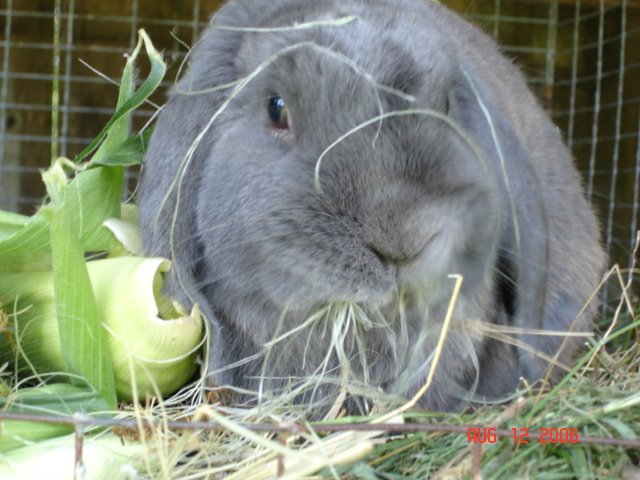
We've had Jack now for about 18 months now. He has a great personality and a friendly disposition AND he knows his away around the bedroom, if you know what I mean wink, wink. He'll get to strut his stuff with the ladies come the first of the year, as we'll be breeding the doe's in preparation of Easter.
We now have 4 rabbits; Jack and three Holland Lop females (doe's). We just relocated all 4 from their outside cages to their inside cages in our garage. Although it's still chilly in the garage they're fine. The biggest concern with keeping rabbits outside during the winter is not necessarily the cold but rather the wind. With them being inside it's easier for us to take care of them and the get more attention and lovin.
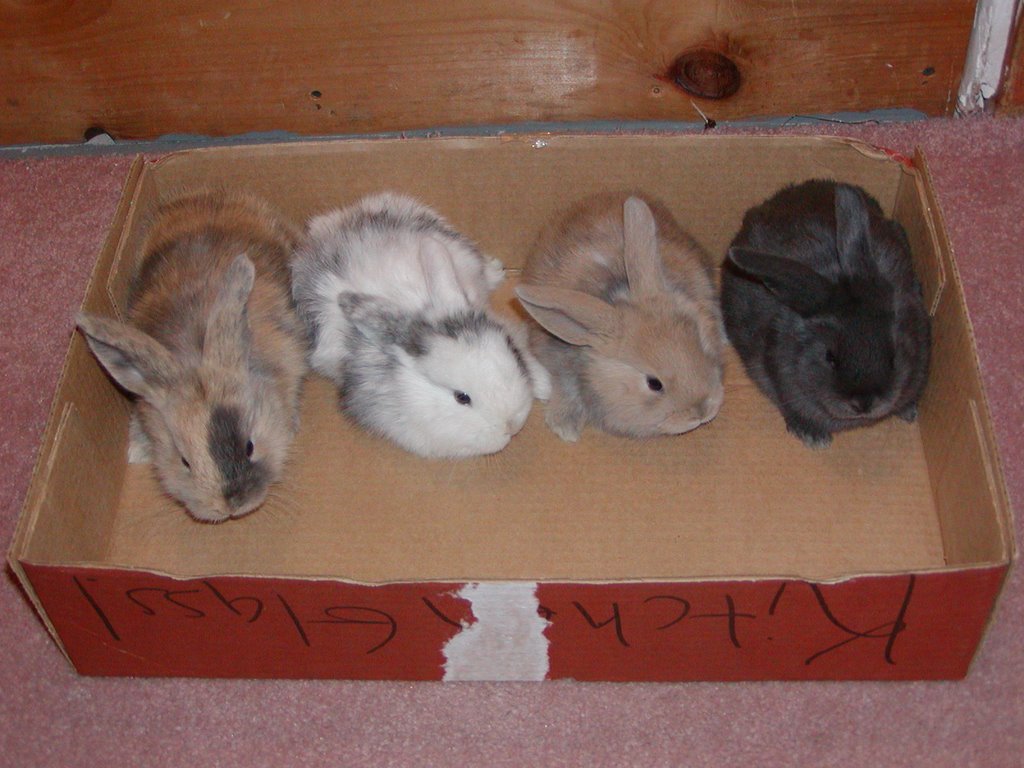
Here is a picture of Jack's babies from his first litter. These 4 adorable bunnies were born Tuesday, April 4, 2006. They all went to nice homes and are doing great today!

Meet Crackers

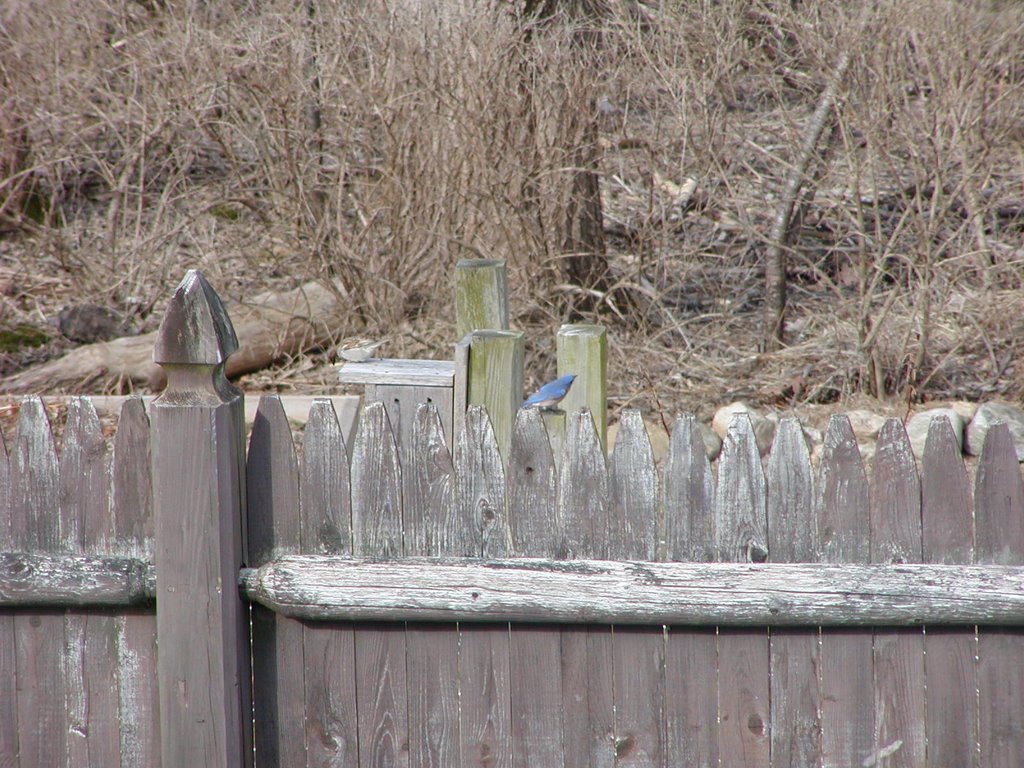
The pictures here are of a little guy we found hangin around our butterfly and dahlia garden. As you can see from the second picture he's one tough dude to spot. If you didn't know he was there you'd miss him 10 times out of 10 and you'd go hungry. Oh by the way, our dahlia's were fantastic this year, as you can see here!
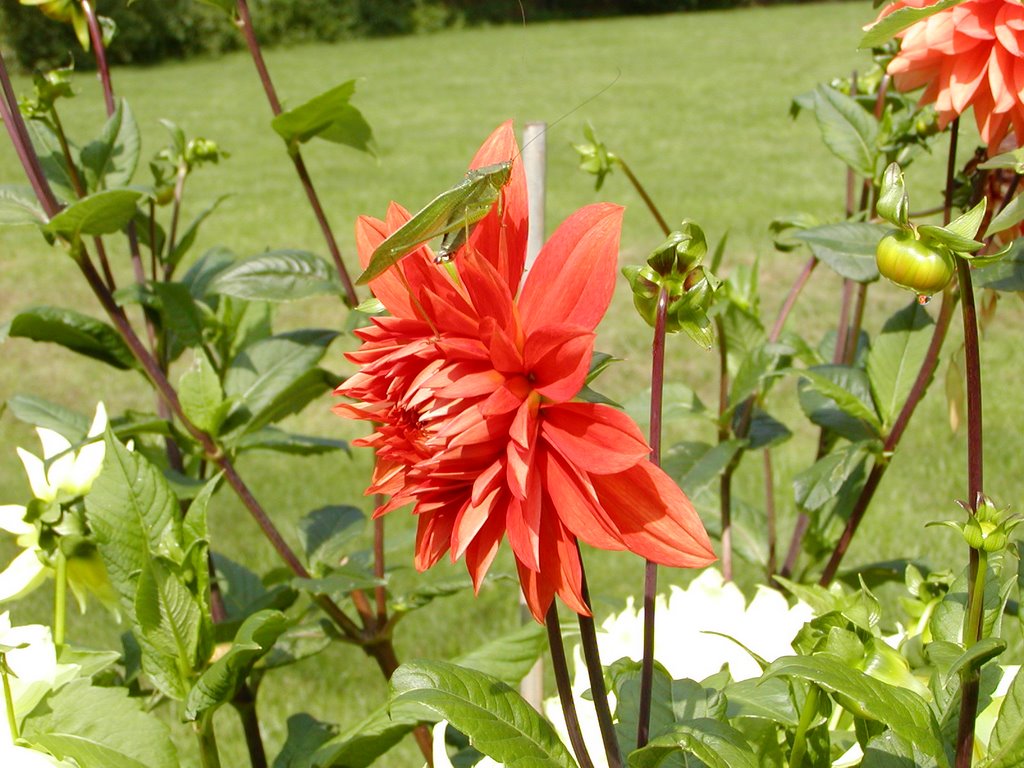
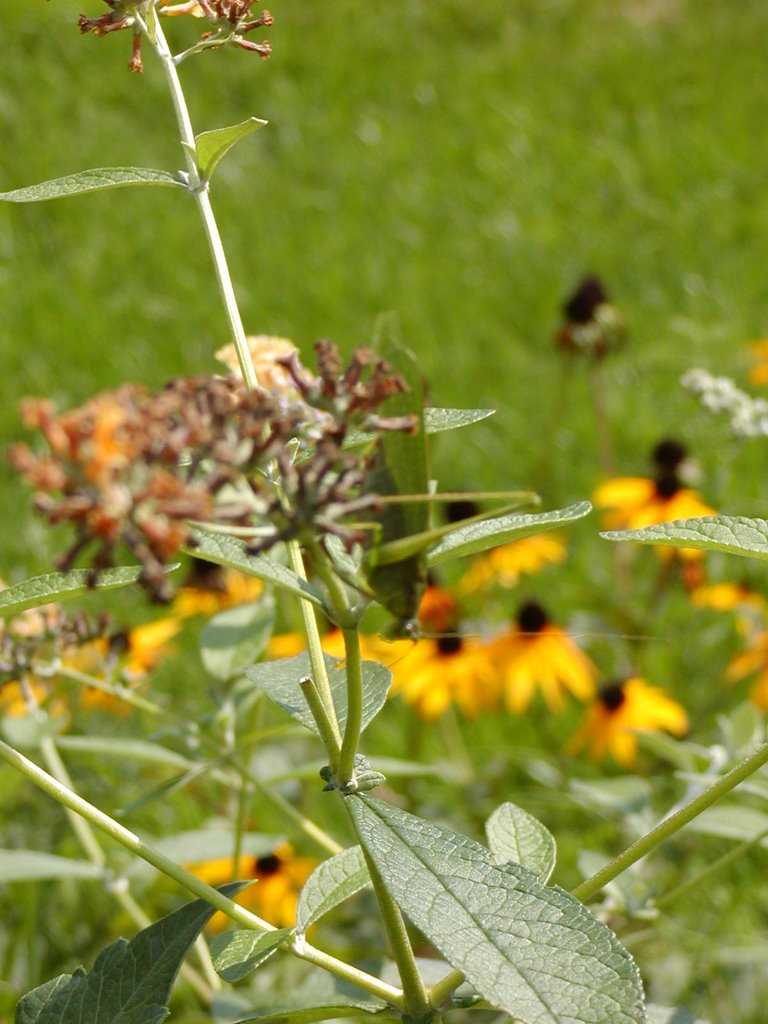
Do you see him?!
How bout now, anything?
Look closer. He's there; I wouldn't tease you like that...