Showing posts with label frog. Show all posts

Wednesday, August 14, 2024

Skinny Dipping, Perhaps

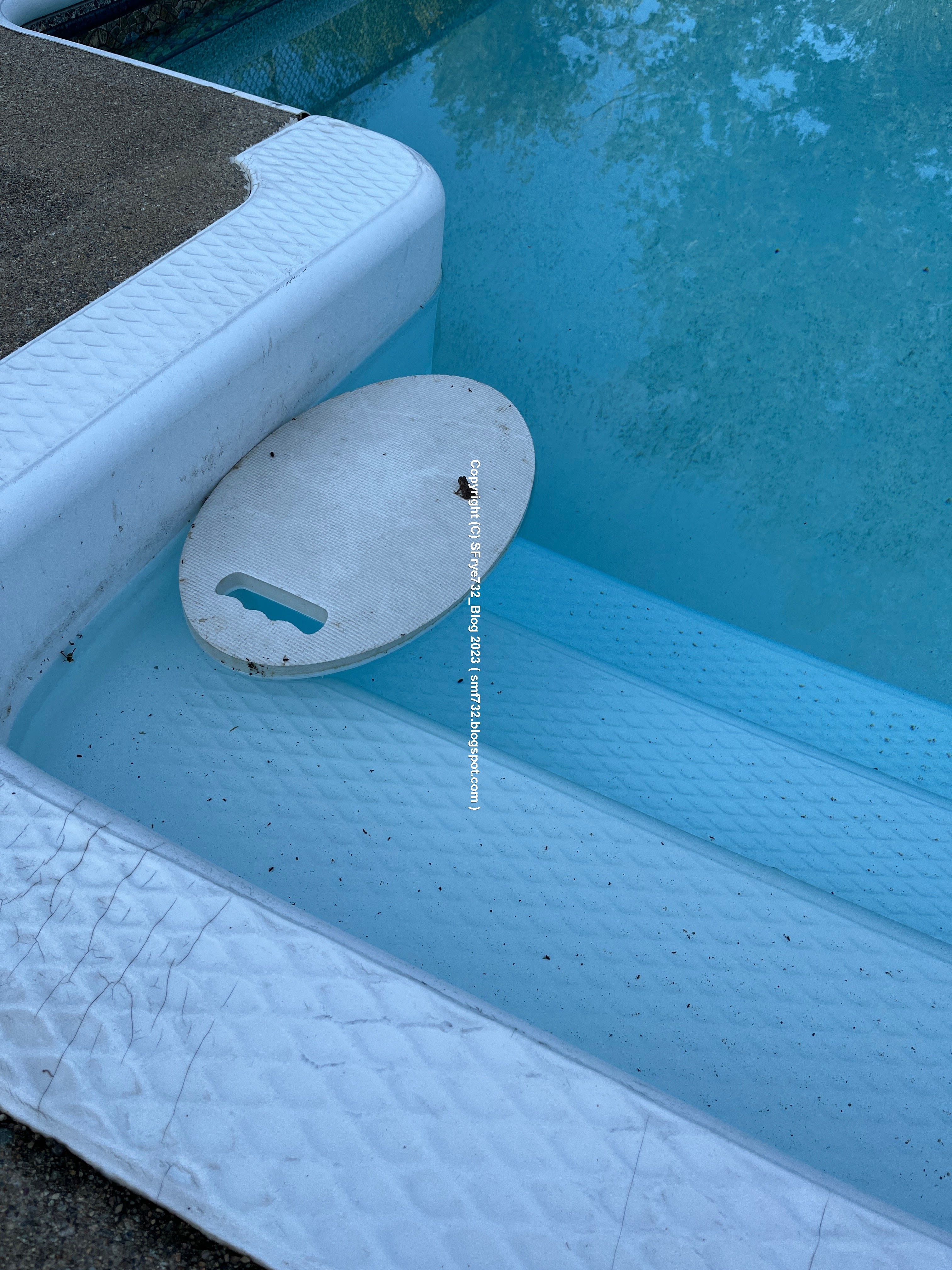
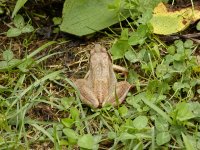
I spied this frog making it's way to the edge of my pool last night.

You can see it's wet pee stain behind it.

Just might be the BIG frog I've pulled out of the pool the last several mornings.


There was a skunk in my raised bed digging the other evening but ran off as soon as I turned the spot light on and stepped out onto the deck.  I welcome them, as they're terrific at digging up grubs, however, as beneficial as that sounds, their digging is SO invasive and makes a mess of my lawn, UGH!  Stick to the gardens and we'll be fine, the skunk and I, otherwise we're gonna have an issue...

Sunday, June 16, 2024

Bucket-O-Frogs

Ah, the joys and surprises of doing my morning pool inspections.  I never know what critter(s) I'll find -


I removed (18) frogs from my pool yesterday morning!

This group was in the skimmer basket, the others were in the water.  Of course the ones in the water would dive deep, swim away to avoid me.  I eventually caught them all and moved them away from the area.

Guessing the heavy rains we had the previous evening had something to do with all these dudes deciding to go pool 'hopping' (see what I did here 🤣) in my back yard.

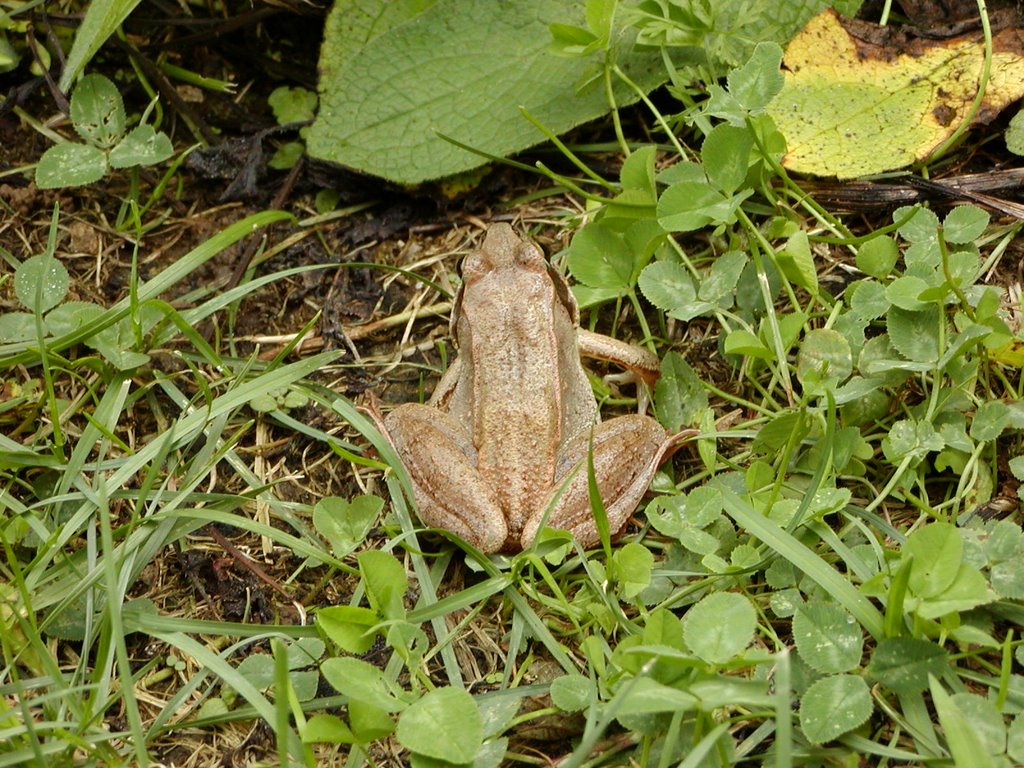
The red frog in the above pic is a wood frog.  I recall seeing these all the time at my folks house growing up.  I believe the others were all Green frogs.

Sunday, July 23, 2023

Wanted: Amphibian Life Guard

I think we all can agree that Mother Nature is angry, if the crazy weather we've been having here in New England this summer is any indication.

One of the things I've noticed to date has been the lack of toads in my yard and frogs in my pool.  In years past I'd always come across a big toad here and there, even in the pool some mornings, as well as frogs in the pool too.  This year I hadn't seen any until recently.  Same with Honey Bees, I've seen only a handful in my yard to date, despite all the flowers I have blooming.

That being said, with all the rain we've been having recently there have been a slew of baby toads and small frogs in the pool.  Sadly, except for the one dude in the picture, who's taking advantage of the floats I intentionally leave in there for them, all the others have been dead; drowned! Yup, I've skimmed well over a dozen of "croaked" (hehehe) toads and frogs from my pool in the last couple of weeks.


I wish I knew of a way to stop or prevent these little fellas from falling or jumping into the pool.

Tuesday, July 31, 2018

Tadpole or Polly Wog?!

The tadpoles we had in an aquarium became little frogs. Oodles of them!


Loaded them up and off to a local pond they went and released.

Thursday, September 28, 2017

Taking In Some Rays

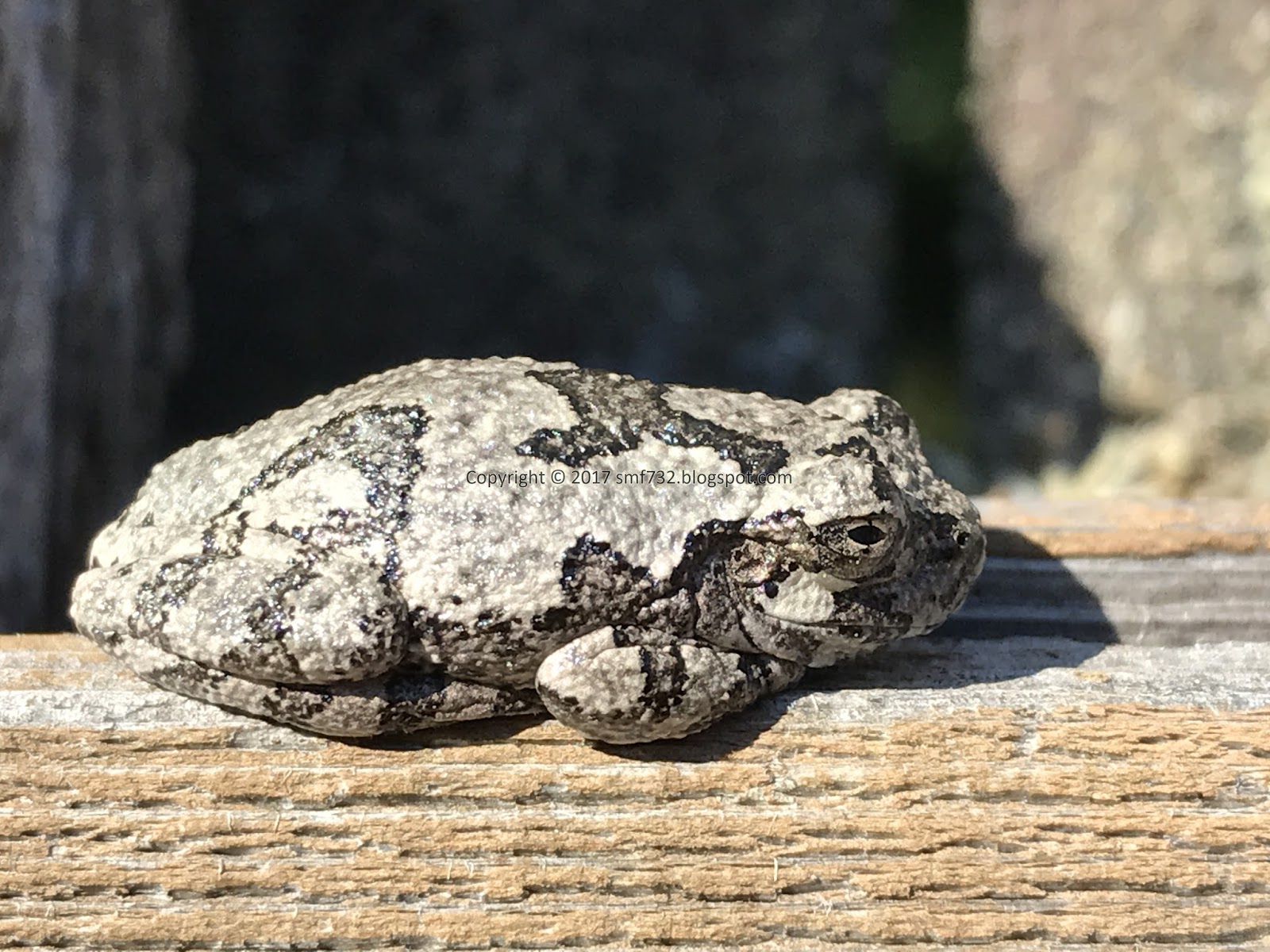
This awesome Tree Frog was basking in the morning sun atop our back fence gate.  I'm thinking he thought he was well hidden and camouflaged, as he never moved.  Stayed there a good part of the day.  I'd stop and chat with him each time I passed by. 


Then he was gone.  Off to catch some pesky insects I hope.

Wednesday, August 23, 2017

RIBBIT!


We came across this Tree Frog leaving the neighbors house this past Friday evening.

He blended in nicely with the grass.  Almost invisible.

Nice to come across these little dudes and see there are some still around.

Monday, August 24, 2015

Froggie Went-A-Swimming


It wasn't until August 19 that we had our first amphibian cooling off in our pool.  Ironically, we removed this dude fro the pool three days in a row.  He was determined to stick around.

Sadly, I've not seen many frogs or toads this Spring and Summer.  Not sure if something's going on or if this past Winter took it's tool on them with the bitter cold and deep deep snow.

Wednesday, August 19, 2015

NOT A Door Knocker!


Quite an unusual place for this Green Tree Frog to hide!  First one I've see at the ole homestead in a while and a pleasant sight at that - at least for me.

Little fella got a little "twisted" each time the door handle was turned.

Perhaps, the metal handle was the coolest place he could find. And by coolest I'm referring to temperature cool, not cool looking cool.

Cool right?!

Tuesday, September 09, 2014

Fun With Frog A Drinking Game


JoAnne and I met the neighbors and another couple at our favorite, local restaurant/watering hole, Coles Tavern this past Friday night.

We dropped Emilie and her friend off at the Franklin High School so they could attend the football game.  Our neighbors did the same with their two youtes also.  So, it was a kid's free evening for dinner and some wobblie pops.

It was a beautiful night, so we sat out on the deck.  We also had an unexpected visitor at some point later that night - a rather large, very large actually, Grey Tree Frog.  He was sitting over in a corner of the deck minding his own business but I wanted  him to join us.  Regrettable for him no doubt and for me too this dude was kept a lot longer than he would have liked.  He also got to see the inside of the restaurant too.

Needles to say the wobblie pops were nice and cold and flowing.

I decline to provide any more information or answer any other questions.  I plead the fifth...

Tuesday, April 02, 2013

A Small Chorus Frog


With the exceptions of hearing my kids calling me "dad", one of the next best sounds I enjoy is the Spring Peeper.  Their chorus is an indication that Spring has arrived.  It also reminds me and takes me back to when I was growing up.

Well, it's that time of year again!  I've noticed them for a couple weeks now but for some reason last night, just after dark, I stepped outside and they seemed louder and more were joining in.  If not for the cold I could have sat out there for hours just listening to them.

If you've never heard a Spring Peeper or if you've forgotten what they sound like take a listen to this "The Best Spring Peepers night sounds recording..."

Friday, September 23, 2011

Froggy Went a Courtin...

Earlier this month Emilie and I took a drive to a local ponds and released our bullfrog. I caught this boy is early August, so we had him for about a month and enjoyed having him around. However, with winter approaching we wanted to let him go with plenty of time to fatten up and locate a good hibernating spot.

Off we go, Shaquille O'Neal and I, through the woods and down the path to the pond -


And here's Mr. Froggy. He had something going on with his mouth area when I caught him that didn't really get much better under our watch. Perhaps, getting back into a pond and wallowing in mud will help it heal.


Just hope he's smart enough to steer clear of the Great Blue Heron we saw when we arrived.

Monday, July 20, 2009

Ribbit Ribbit...

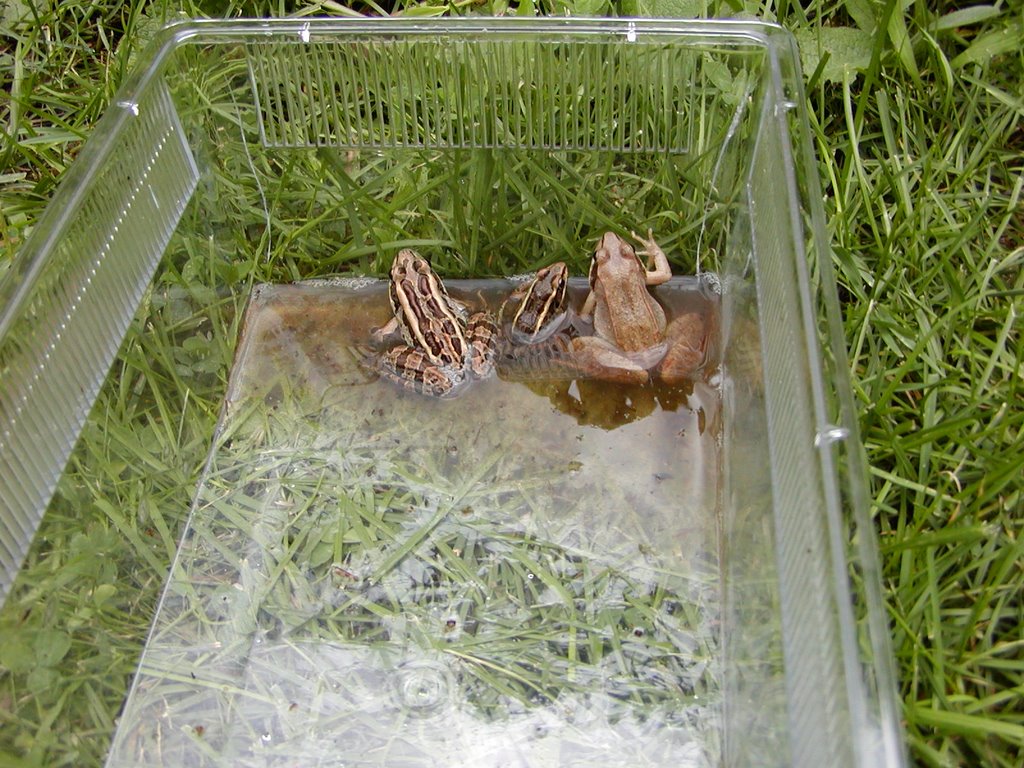
Here is Emilie’s latest hobby – a tank of amphibians.


We have four female American toads, (Bufo americanus) and six frogs – four green frogs (Rana clamitans), a pickerel frog (Rana palustris) and a wood frog (Rana sylvatica). The later two were added to the mix yesterday, so not seen in the above photo. We found the green frogs in our pool. The toads were found in various spots in our yard.

Emilie checks the pool each morning for frogs and skims out any live insects and then relocates them, as breakfast, to the tank. We also walk our yard each evening looking for and catching insects to feed these critters. Fortunately, the toads are not fussy eaters and will pretty much eat whatever insect you drop in, as long as they move. The Japanese beetles, Oriental beetles, and June beetles are plentiful right now and eagerly gobbled up. Other edible insects, that take more effort to catch, are; woodlouse, also known as sow bugs, pillbugs and isopods, centipedes, earwigs, ants, worms, etc.

It’s actually very interesting to watch these amphibians eat. It happens too fast to really see their tongues in action, however, you can hear the sound of their tongues lashing out snatch a meal.


The pickerel frog will need to be released soon. In researching this posting I've learned that pickerel frog are known to be toxic to other frogs - when stressed their skin secrets a toxin that can be fatal to other frogs...

Thursday, September 11, 2008

A Florida Invasive Exotic

Cuban Treefrog - Osteopilus septentrionalis
Here are a couple pictures of what I believe is a Cuban treefrog. We noticed him sitting in this rather unusual, hot and sunny spot one morning where he remained all day long. We didn't bother with him other than to take some pictures, so I'm not 100% certain it's a Cuban treefrog but he did have rather larger suction cup on the ends of his toes which is an indication of a Cuban.
We came across another one earlier in the week. This was was hiding in the folded picnic table umbrella beside the pool - a hiding spot my brother was aware of. When he opened it up, there was a HUGE Cuban treefrog peacefully hiding out! Well, he was huge as compared to the treefrogs found in Massachusetts - actually he was huge as compared to most frogs in MA. This one we caught, held and passed around to the kids and this one was DEFINITELY a Cuban Treefrog - no doubts and regrettably no pictures either!
However, at the time I wasn't aware that these frogs are considered an invasive species and the recommendation is to euthanize them. Had we known, perhaps we would have followed Florida's advice but either way these guys are simply awesome!

Cuban treefrogs are the largest treefrog in North America, however it is not native to North America. This species was introduced to southern Florida from the Caribbean and has continued to spread in Florida.

Cuban treefrogs are voracious eaters and unfortunately they eat Florida's native frogs, toads, and lizards, in addition to insects and spiders. In fact, Cuban treefrogs are SO successful at taking over habitat and eating Florida's native species that they are considered an invasive exotic (non-native) species - they are a threat to the biodiversity of Florida's native ecosystems and wildlife.

Due to the destructive effects Cuban treefrogs have on native species of amphibians and reptiles, many biologists recommend that Cuban treefrogs be euthanized/killed. A humane method of euthanasia is recommended. Just make SURE the frog you have is a Cuban treefrog before euthanizing it.

Freezing is a humane way to kill amphibians because their bodies go into a state of torpor - just as they do in cold weather outside, and after an extended time in freezing temperatures, the frogs die. Put the frog in a plastic ziploc bag, then into the freezer over night and out in the trash the following morning, done.


The distinguishing characteristics of the Cuban treefrog are:
  • Size of the adults (up to 5 inches in body length, much larger than native Florida treefrogs)
  • Enormous toe pads (larger than toepads of native treefrogs in Florida)
  • Bumpy skin on the back, like skin of a toad
  • Skin on top of head is fused to skull

Cuban treefrogs can be highly variable in color -- from pale tan/pale green without any markings to dark green or brown with an even darker color pattern on the back and legs. Sometimes they almost look white when they are inactive or cold.

For more information visit - UF Florida Wildlife Extension - University of Florida

Friday, September 08, 2006

Mr. Pickerel Frog


Here is a picture of a (2) Pickerel frogs and along with a Wood frog. These frogs were caught at my dads house and released at my place after we enjoyed them for a few days. What I didn't realize and found interesting when putting this blog article together is the fact that the Pickerel frog produces a toxic skin secretions that is fatal if it is absorbed through the skin of other frogs - Here I am housing these critters together. The good news is that no harm came to any of them, we didn't keep them long enough. I still see these guys around when I am out and about in the back yard. As a matter of fact I had to scoop the smaller Pickerel frog out of our pool just the other day.

The pickerel frog is a medium sized frog being about 3 inches in body length with smooth-skin. Adults are tan or brown (never green) with four to five pairs of squarish brown spots. They have complete light gold dorsolateral ridges down the back. The belly is plain white. There is a distinctive yellowish wash in the groin areas and the thighs. There are brown tiger stripes on the hind legs.

Pickerel Frogs are similar to Northern Leopard Frogs in general size and appearance. Unlike leopard frogs, pickerel frogs are always brown (leopard frogs, except plains leopards, may be green or brown), have square spots arranged in pairs on the back, and a yellowish wash on the thighs (all leopard frogs usually have a greenish wash).

Pickerel frogs breed in spring (late April, May, and June). The males call is a deep snore. It is shorter and higher pitched than the northern leopard frog’s call and is usually not followed by a chuckle as in leopard frogs. They call from the shore or from underwater in shallow portions of the wetland. Females lay 2,000 to 3,000 eggs. The tadpoles transform in two or three months.

Side-by-side comparison of a Pickerel Frog vs a Leopard Frog


Wednesday, September 06, 2006

Mr. Wood Frog

Here is a picture of a Wood frog we caught at my dads house. As we usually do we took him to our house and enjoyed him for a few days before releasing. This one was quite large, actually one of the largest I've seen, and about as big as they get. My dads house abuts wetlands, as does our so this guy will do just fine in his new surrounds. As a matter of fact it's been 3 weeks since we let him go and he's still out there. I've come across him several times, which is what we were hoping for.

The Wood Frog is most easily recognized by its "robber mask." This black band stretches past both eyes to the eardrums. Wood Frogs also have dorsolateral ridges, two raised lines running down their back and a white belly. Because Wood Frogs spend a lot of time on land, the toes on their front legs are not fully webbed. You can tell males from females by their swollen thumbs

Wood Frogs are very active, and can jump farther than most frogs. To hunt, they can ambush prey, like most frogs. Wood Frogs eat beetles, flies, caterpillars, and other insects; and also spiders, other arthropds, slugs, snails, and worms.

Predators of Wood Frog eggs and tadpoles include leeches, fish, and aquatic insects. Adults are eaten by raccoons, owls, and other animals

When winter's snow is all but gone, leaving ponds and ditches brimming with melt water, wood frogs emerge from hibernation and get right to the business of breeding. Wood frogs (Rana sylvatica) are among the first amphibians to breed each year, starting as early as mid-April.

Note: Boreal Chorus Frogs, Spring Peepers, and the Blue-Spotted Salamander, are a few examples of animals that also breed right after the snow melts.

Wood frogs are truly remarkable little creatures. They are the most widely distributed amphibian in North America, even reaching beyond the Arctic circle! They can mature from egg to transformed frog in as little as 45 days. But perhaps their greatest feat is the unique way in which they spend winter... frozen solid!

Wood frogs are members of a rather exclusive club of vertebrate (back-boned) animals that overwinter on dry land and survive the freezing of their body tissues. World-wide there are only a few species of vertebrates that can tolerate freezing. (Baby painted turtles are the "highest" vertebrates known that can tolerate tissue freezing). Though this feat is "no big deal" to many plants and invertebrates (lots of insects do it), it is a neat trick that enables wood frogs to inhabit many northern environments and frees them from dependence on permanent bodies of water.

The Swallowtail Chrysalis is just one example of an insect that winters in it's pupal or chrysalis stage. Some insects overwinter, and deal with the cold as adults, some as pupae, some as eggs and even some as caterpillars.

Sunday, September 03, 2006

Mr. Grey Tree Frog - UPDATE

Here is an update on the tree frog -

We let him go yesterday. We worked on taking some pictures of him, so we placed him on a few different plants. All in all he was a good boy and let us pose him as we wanted.

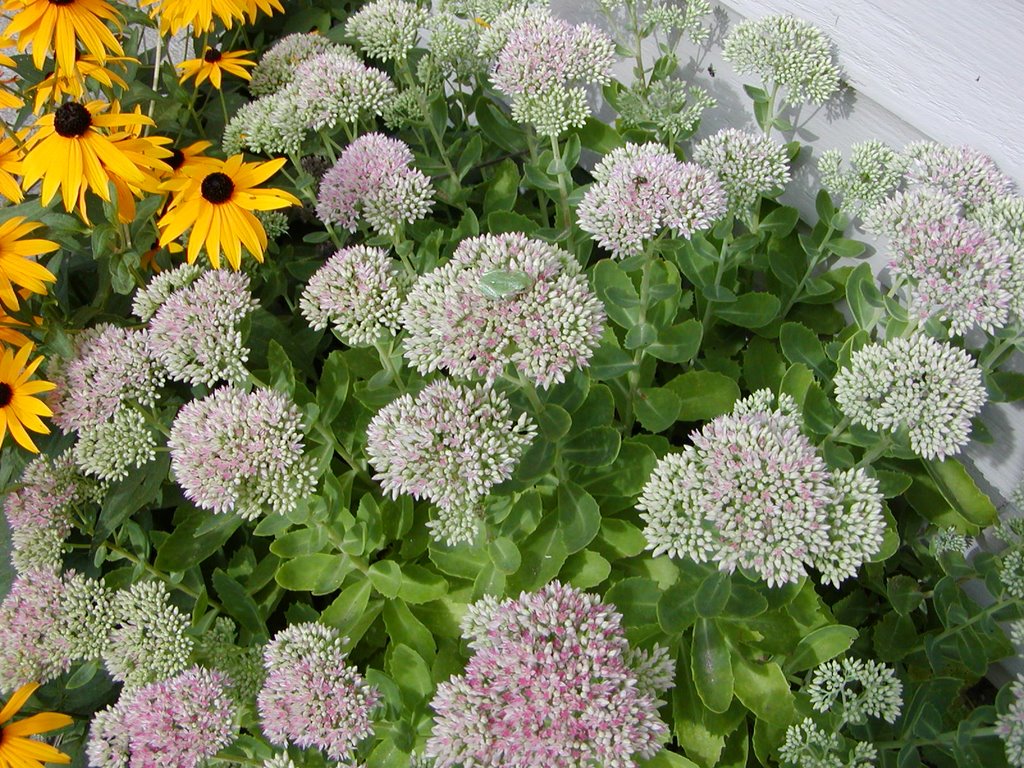
When done taking pictures we placed him on one of our Autumn Joy Sedum plants - Can you find him in the picture below? You'll have to look hard, as he blends into these particular plants perfectly - he looks like one of the plants leaf.

We placed him on this plant, which had some flies and bees also visiting and gathering nectar from the flowers. We watched him for a few minutes and were amazed to see this little guy line up one of the flies, which was on another flower approximately 4 inches away, and leap. It happened so fast but the end result was the frog had caught himself a snack - a mouth full of fly!


Here is a picture of him sitting in the center of a Sun flower -


Hopefully he'll choose to stay in the area we placed him and continue his rein of insect control and that we'll meet up with him again.

Thursday, August 31, 2006

Mr. Grey Tree Frog


Well, not to be out done by the visiting Spring Peeper just the day before, this handsome fellow made an appearance last night. This is a Grey Tree Frog and I came across him hiding perfectly on my garden hose. The hose is grey and green, and so is the frog - camouflaged perfectly. Had I not seen him, he surely would have gotten hurt, even 'croaked', as I was in the process of unwinding the hose.

Emilie ran and got her critter bucket and as usual we brought him in the house. We caught him several bugs incase he got hungry and enjoyed watching him climb all over the sides of the critter bucket. These guys are similar to the Spring Peeper in that they both have large toe pads for gripping when climbing.


Growing up I don't recall ever seeing or catching Grey Tree frogs but I've come across them more and more lately. Last year we found a fairly large one hiding in the hole of a stockade fence post just beside our pool. We didn't bother him and he stayed there for days on end - I guess the eat'n was good there, after all we're always finding all types of insects floating in the pool.


The chameleon of the frog world.

That's how some people describe the gray tree frog, Hyla versicolor – a name that implies this animal is always the same color, and ignores its ability to adapt to backgrounds ranging from gray to green. But, certainly, this amphibian's most curious feature is its ability to change colors much like the more-famous lizard with the same trait, the chameleon.

They live wherever they find small ponds, roadside ditches and other pools of standing water. The best habitat is shallow water located close to mixed stands of willows, oaks and pines. The frogs also prefer lots of overhead vegetation, and fallen branches or extensive vegetation along the water’s edge. They often congregate in areas with an abundance of shrubs and vines.
During the day, gray tree frogs hide on or beneath rough tree bark, in hollow trees and on leaves. They tolerate high temperatures quite well, and they're most active during the summer, when humidity is high.

Their remarkable ability to climb or rest on vertical surfaces is the result of a mucous layer produced by toe pad cells. This mucous creates a sticky bond with the vertical surface that’s strong enough to support the frog’s weight.

This frog’s breeding season lasts from early April through July. Males begin calling at breeding sites when night air temperatures reach around 60 degrees. Their calls resemble musical, birdlike or buzzing trills, and the chorus attracts females to the site. The frogs then breed in water.

Afterwards, each female may produce between 700 and 3,800 eggs, and biologists have documented individual frogs producing multiple clutches in a single season. Eggs are light brown, and they measure barely 1/25-inch in diameter. After they are deposited, the eggs attach to floating vegetation in clumps of 30 to 40 eggs. They hatch in only four or five days, and the tadpoles completely metamorphose within two months. Young frogs typically stay near the breeding site for the remainder of summer.

Tuesday, August 29, 2006

Mr. Spring Peeper

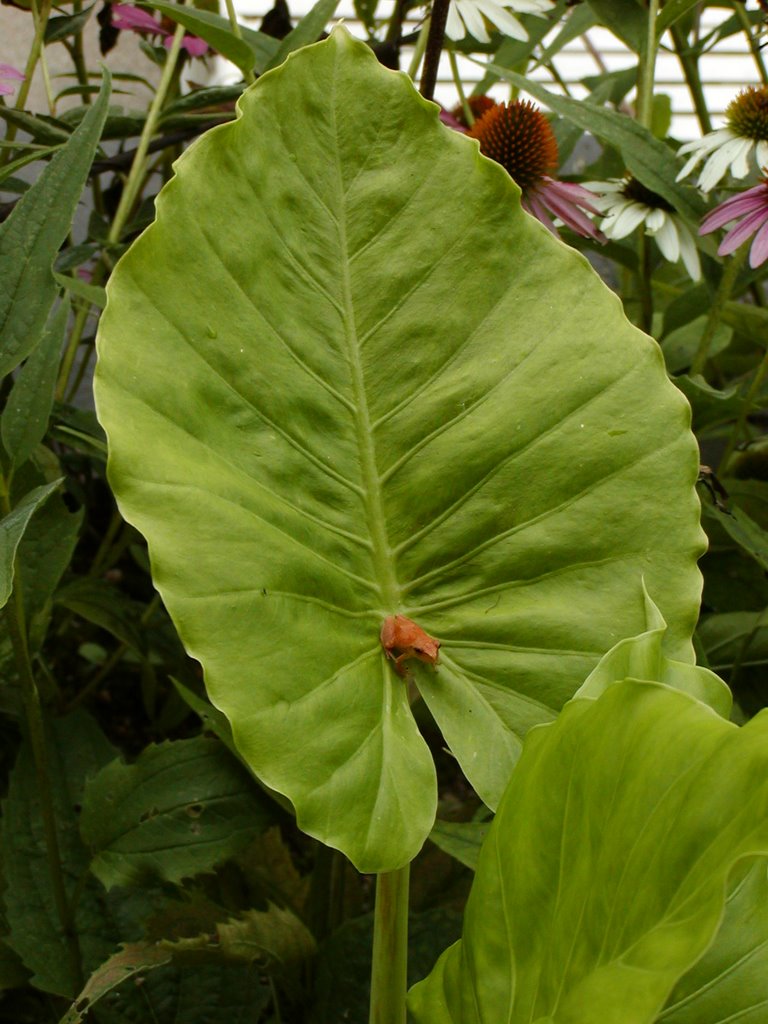
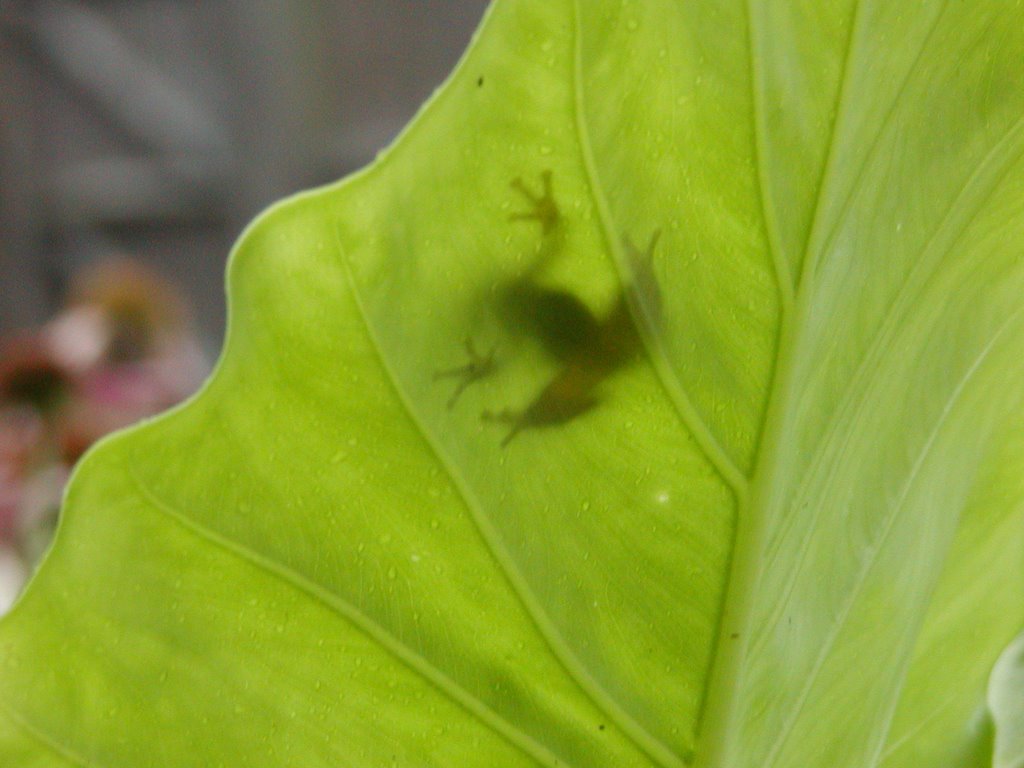
Here are a couple pictures of a visitor we had last night just before dark. He’s perched on a Taro plant leaf of ours. The color contrast doesn’t do too much to help camouflage him but it makes for a good picture. Truth is I placed him there. I found him on the grass, where I almost stepped on him, so I picked him up and moved him to a safer place and had him strike a pose…


Click here to hear the males voices and click the 'Listen' button:


One of the first true signs of spring in New England and nearby areas is the evening calling of the Spring Peepers

Spring Peepers, Pseudacris crucifer are small frogs that grow less than an inch and a half long. They can be tan or gray or dark brown, but they all have a dark "X" on their backs. Spring Peepers also have large toe pads for gripping plants when they climb.Spring Peepers are rarely seen, but are often heard in early spring. They breed from March to June, and in early March you can hear male Spring Peepers calling for mates. Many people think they are crickets, but you only hear crickets in late summer and early fall.

Spring Peepers live in wooded areas where there is water. Usually they are near marshes, ponds, streams, or vernal pools. Spring Peepers need the water to lay eggs. This is also where they mate. Spring Peepers are nocturnal, so they are most active at night.

Male peepers call the females at night in the spring. Each call is a high-pitched whistle, but many peepers’ together sounds like jingling bells. Females come to the calling males, and after mating, they lay eggs on underwater sticks and plants. Eggs hatch into tadpoles in about twelve days. Tadpoles will eat algae and tiny organisms in the water.

Tadpoles will change to adult Spring Peepers in a few weeks. Adults spend the rest of the year in the woods, coming out at night to look for food. Spring Peepers eat mostly small insects, such as beetles, ants, and flies, as well as spiders. They look for food on the forest floor or by climbing low shrubs. In the winter, Spring Peepers hibernate under logs or loose bark on trees. These small frogs can survive having most of their body frozen.

Spring Peepers have many predators. As eggs and tadpoles, they are eaten by fish, aquatic insects, turtles, and other creatures. As adults, they are preyed upon by snakes, Bullfrogs, birds, and a few mammals.

Tuesday, June 13, 2006

American Bull Frog


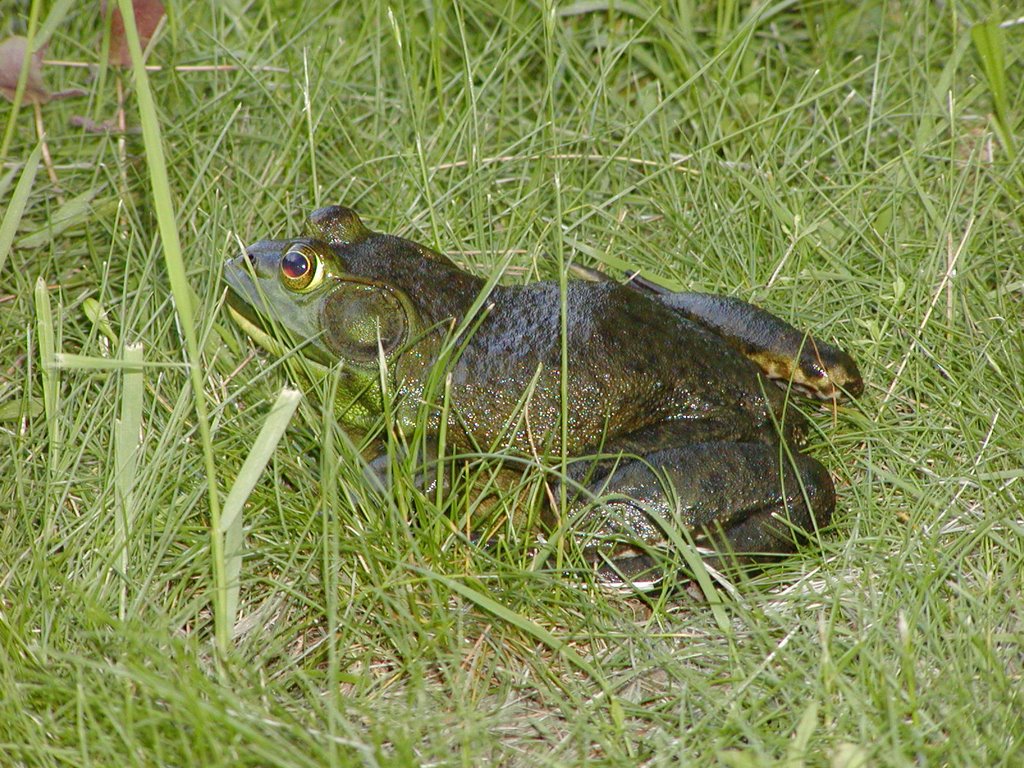
I continue to educate my 4 year old daughter on the wildlife in and around our area. Yesterday our adventures continued with the catching of one of my favorites, the Bullfrog.

The bullfrog brings up many fond memories of my childhood, of a time when these types of amphibians were more common and I didn't know what true responsibilities were. Summers visiting and vacationing on Sebago Lake's Frye Island. We wouldn't have been to the cottage for very long before I'd race down to the swamps in search of some type of critter - snakes, toads or frogs. Bullfrogs were the more common and most fun and I almost always ended up bring one or more back to the cottage to spend the time with.

We were fortunate to come across a bullfrog yesterday while visiting my mom. This frog was kind enough to let me catch him so that my daughter could get a first hand, up close look and feel and yes, even a kiss... Up until this point my daughter had only seen and held tiny frogs and toads but this critter put the name "bull" in bullfrog. This guy was even kind enough to "cry" for us. I don't suspect many people have heard a bullfrog cry, and that's too bad, it's a sight and sound to behold.

Internet Bullfrog reference